Notes on Fall & Winter Gardening
I have loved the idea of gardening in the shoulder seasons for so long. Early in my gardening self-education, I came across Nikki Jabbour’s The Year-Round Vegetable Gardener, and the picture of her beautiful greens tucked into the snow was so compelling. The more I learned, the more intrigued I was at using my backyard as a refrigerator for the freshest, crispest greens in the cold seasons. Nikki’s book started me down a long path of learning from other winter gardeners, and many years of trial and error. This post is just a collection of things I’ve learned so far, and I hope it can help you if you are interested in trying a fall and winter garden.
First of all, I want to share some of the benefits that got me hooked on Fall and Winter Gardening:
No bugs! (This comes with a strong caveat. There actually are bugs, but once the cold really sets in, pest pressure diminishes to the point that it’s no longer a battle to save my crops.)
It’s not so hot outside! (Again, a strong caveat. A lot of this season’s gardening happens well before fall and winter, in the heat of summer. But the harvest period from November to March is a much more pleasant time to be outside in southern Indiana, for me at least. I wilt in high humidity.)
The freshest, crispest, sweetest greens. I didn’t love kale or chard or cabbage until I grew them in the cold.
Getting more from a small space. With the garden growing food all year, it becomes so much more productive than just having a spring and summer garden.
Slow harvests. I struggle in the summer to keep up with my plants, and often end up composting a lot of what could have been eaten if I were more timely with harvesting/cooking/preserving. In the late fall through early spring, plant growth happens slow enough that I can keep up with it.
There have been many things I had to try and fail at to get a handle on how growing in the fall and winter actually works. Here are some of my notes.
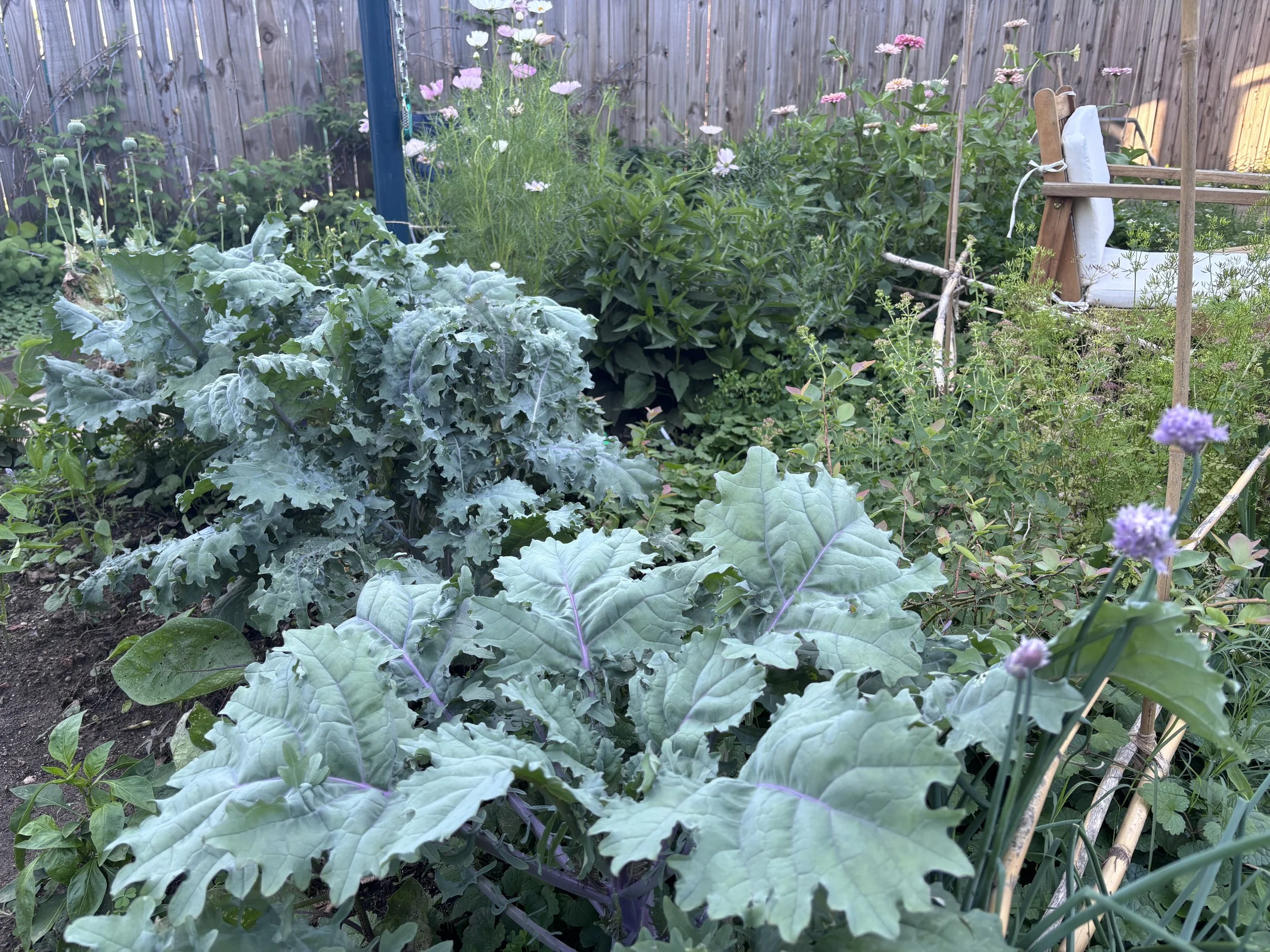
These Russian Red kale plants survived harlequin bugs and caterpillars in the summer, downy mildew in the autumn and below 0-degree temperatures in the winter, producing handful of leaves until the following summer.
The Fall and Winter Season
The first thing to understand about growing in this season is that daylight hours are decreasing until the Winter Solstice (December 21), then gradually increasing. At our latitude, even plants in “full sun” locations won’t be getting enough light to grow from about mid-November to early February.
With this in mind, I like to break up plants grown in this season into a few different groups, based on when they are harvested.
I would consider the first group to be fall plants that won’t survive winter weather. These are root crops and tender greens that won’t withstand our harder freezes in midwinter. So they need to grow to their full size before mid-November (when light levels get too low), to then be harvested or held in the garden but protected against the cold. Among these plants would be beets, carrots, turnips, rutabaga, and less hardy leafy greens and lettuces.
The next group would be plants that grow until mid-November, survive our coldest temperatures (with or without protection), and then resume growing when light levels increase in February. For me, this has been kale, chard, spinach, winter lettuce and some types of asian greens.
The third group consists of plants that are set out as seedlings in the fall, then grow a bit and stay dormant through our coldest weather, and grow to harvest-size in the early spring. Purple Sprouting Broccoli is a great example, as well as biennial or hardy annual flowers.
Understanding the frost hardiness of these different plants helps me know what to expect and how to time their planting for a decent harvest.
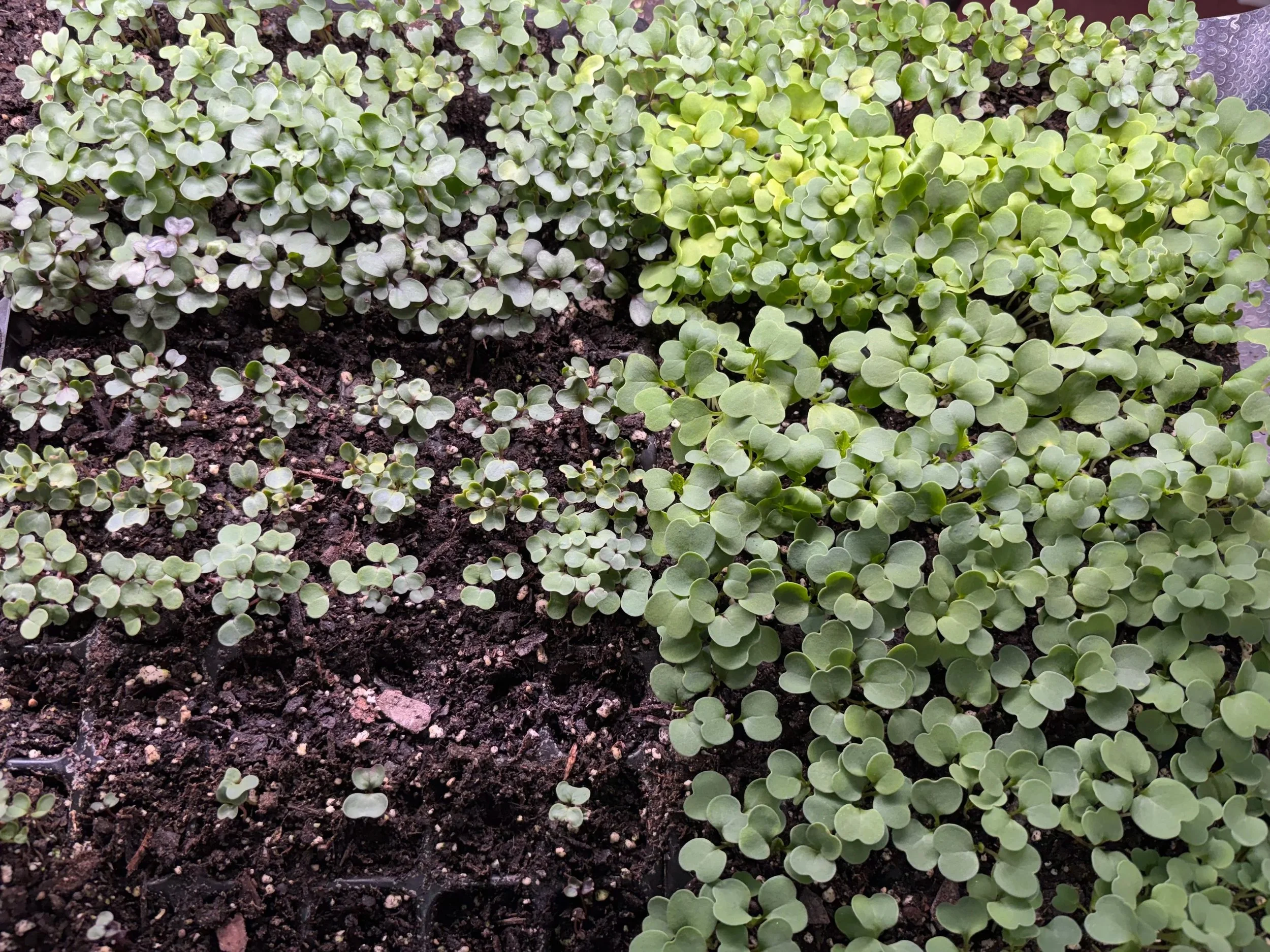
July-started brassica seedlings. These trays are growing indoors under lights so I can get better germination in the hottest time of the year. They are planted thickly in these trays to conserve space—I’ll prick most of them out into individual cells once they get true leaves.
Timing Plantings
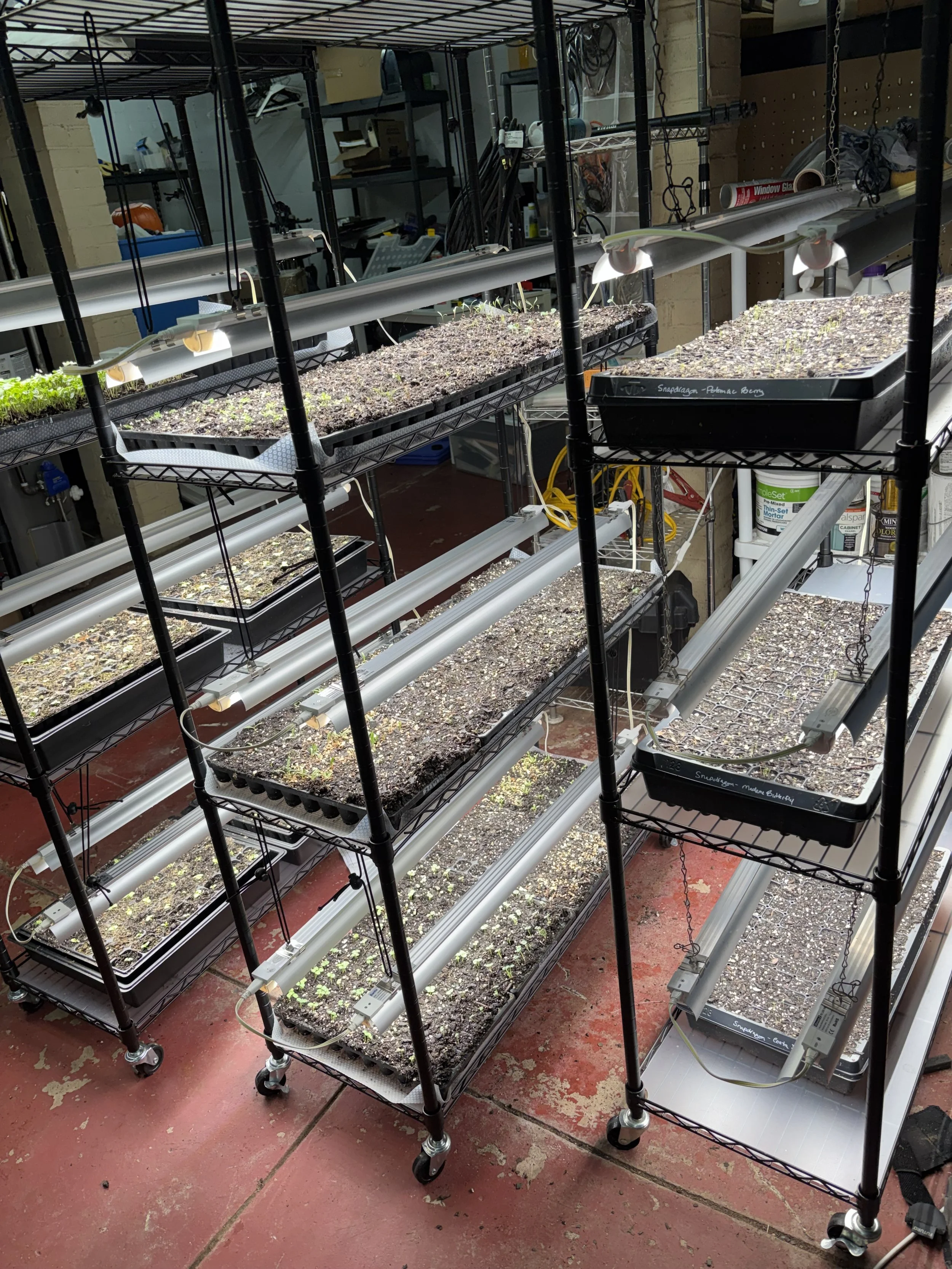
Many cool-weather seedlings are sensitive to high temperatures and won’t germinate or grow well in our summer and early fall conditions. Starting these seeds inside under lights helps me get the best results from my seeds.
The hardest part of growing fall and winter crops in our area is that it is SO HOT until pretty late in autumn. If planted out too soon, plants sensitive to heat stress (lettuce, spinach, arugula and other tender brassicas) may be triggered to begin their flowering phase before the cool weather arrives in November. And then those leafy greens will no longer produce tender, edible leaves.
On the other hand, days are getting shorter. If I wait until too late to start seeds, some plants won’t get sufficient light to produce a harvest before mid-November. So it can be tricky to time the plantings right.
I’m still working out an understanding of what timing works best. I don’t have enough successful experience to give me good data of my own yet. But I have found the charts in Charles Dowding’s How to Grow Winter Vegetables so helpful in giving me a starting point. Knowing that my latitude is lower and temperatures are higher than his, I usually time my seed starting and plantings a couple weeks later than the guidelines he gives.
Generally, you want to plant the seed or seedling early enough that it can grow some roots before the first frost. And then you can count back for seedlings and start the seed in a tray a month or so before planting. But that is a very general recommendation! Some plants, like Brussels Sprouts, take forever to grow, so you want an extra early start on them.
For better germination and early growth on seedlings, I start most inside under lights. Some plants can handle our hot summer and fall weather, but starting inside helps those that would otherwise be stressed.
Estimating Number of Plants
It can be tricky to know how many plants to put in the ground, especially when you are just beginning gardening and don’t have any idea what the yield per plant will be. And I have a small space, so I try to plan as well as I can to make the most use of it.
For me, it helps to think of the groups above. The first group is done mid-November, so I could aim to plant enough to last mid-November through May/June (when the spring plantings of those crops will begin producing). For the second group, I try to plan to have enough food on the plants for mid-November to March, when they really start growing again.
Protecting Plants Against the Cold
One of the things that excited me about fall and winter gardening was the idea that my backyard could be like a refrigerator, holding fresh foods for me though the winter for whenever I wanted to harvest.
The reality was not quite so straightforward, but I have enjoyed being able to gradually harvest leafy greens through the coldest months of the year.
Most of what I would consider fall and winter plants (leafy greens, roots, and some flowers) are hardy to at least 25°F, and many can survive down to 15-20°F (Brussels sprouts, chard, purple sprouting broccoli). With protection against the cold, they can thrive in even lower temperatures.
This year, I will be planting many cold-hardy annual flowers. These are flowers hardy to 0-20°F which set roots in the autumn and bloom in spring. They are the cool-weather-loving early spring flowers that have always eluded me in the past because I waited until spring to plant, and it got too hot in summer for them to grow well. This group includes foxglove, delphinium, Larkspur, snapdragons, feverfew, and many others. I’ll also plant out perennial flowers like rudbeckia, yarrow, and eryngium. Most of these won’t need any protection, but I’ll be ready with protective covers just in case our temperatures dip to below 0°F or whatever the threshold is for specific varieties.
In the future, I’d love to include a list here of cold hardiness for different types of plants, but until then, you’d do best to make a chart yourself of what you’d like to grow, how low a temperature it can survive, and group plants with similar warmth requirements together when planting in the garden. Then, when weather threatens to be colder than certain plants can handle, you can throw a lightweight frost blanket (usually a non-woven material like polypropylene, but there are other options too) over the top of your plants and pin it down with sandbags, bricks or logs, to sort of tuck your plants in against the cold. A lightweight frost blanket gives you 2-6 degrees of added protection against cold (depending on its weight), and you can double it up if needed. For more sensitive plants, it’s nice to have hoops made of curved metal rods, PVC pipe or electrical conduit to lift the frost blanket off the leaves, or the leaves may be damaged by the cold.
There are other ways to protect plants as well. I’ve put pots and 5-gallon buckets over individual plants, or used towels and blankets from the house in a pinch. You can build a cold frame or a hotbed for even better protection.
For root vegetables, you can pull and store indoors somewhere cool. Or you can leave them in the ground and mulch heavily with leaves or straw, and they will stay fresh throughout most of the winter. I haven’t had a big enough crop to really test this method though.
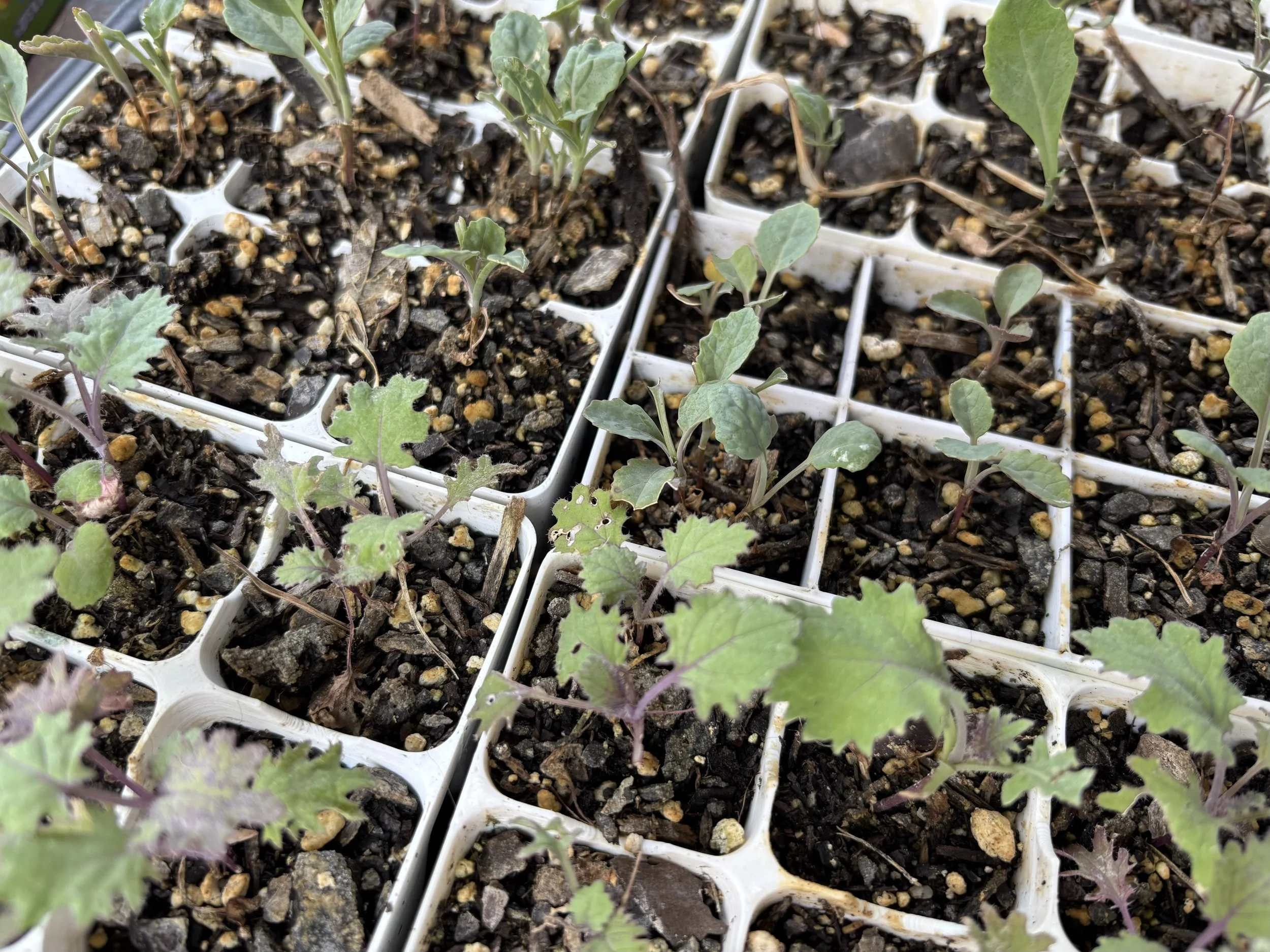
My June-started kale seedlings are recovering after a run-in with cabbage white caterpillars. It doesn’t take long for a few caterpillars to demolish a tray of seedlings, so protect with netting and check for damage often so you can stay on top of it.
Protecting Plants Against Pests and Diseases
After it gets truly cold November, we are pretty much pest free until March, which makes organic gardening so much easier.
Until that cold period though, the bugs are ravenous! I try to keep my seedlings and young plants from the brassica family under bug netting to keep the butterflies and harlequin bugs away. This includes kale, broccoli, cabbage, Brussels sprouts, arugula, turnips, kohlrabi and other asian greens. I don’t worry about radishes too much since I don’t eat the leaves—plus, they make a nice trap crop to attract bugs for easier removal.
Until last year, I never had any disease issues in my fall plantings. I was excited to have so many full sized kale plants with giant leaves going into the winter. But after a couple weeks of cool and wet weather, I found downy mildew on the underside of the leaves. So this year I will space out my plants a bit more to ensure better air flow.
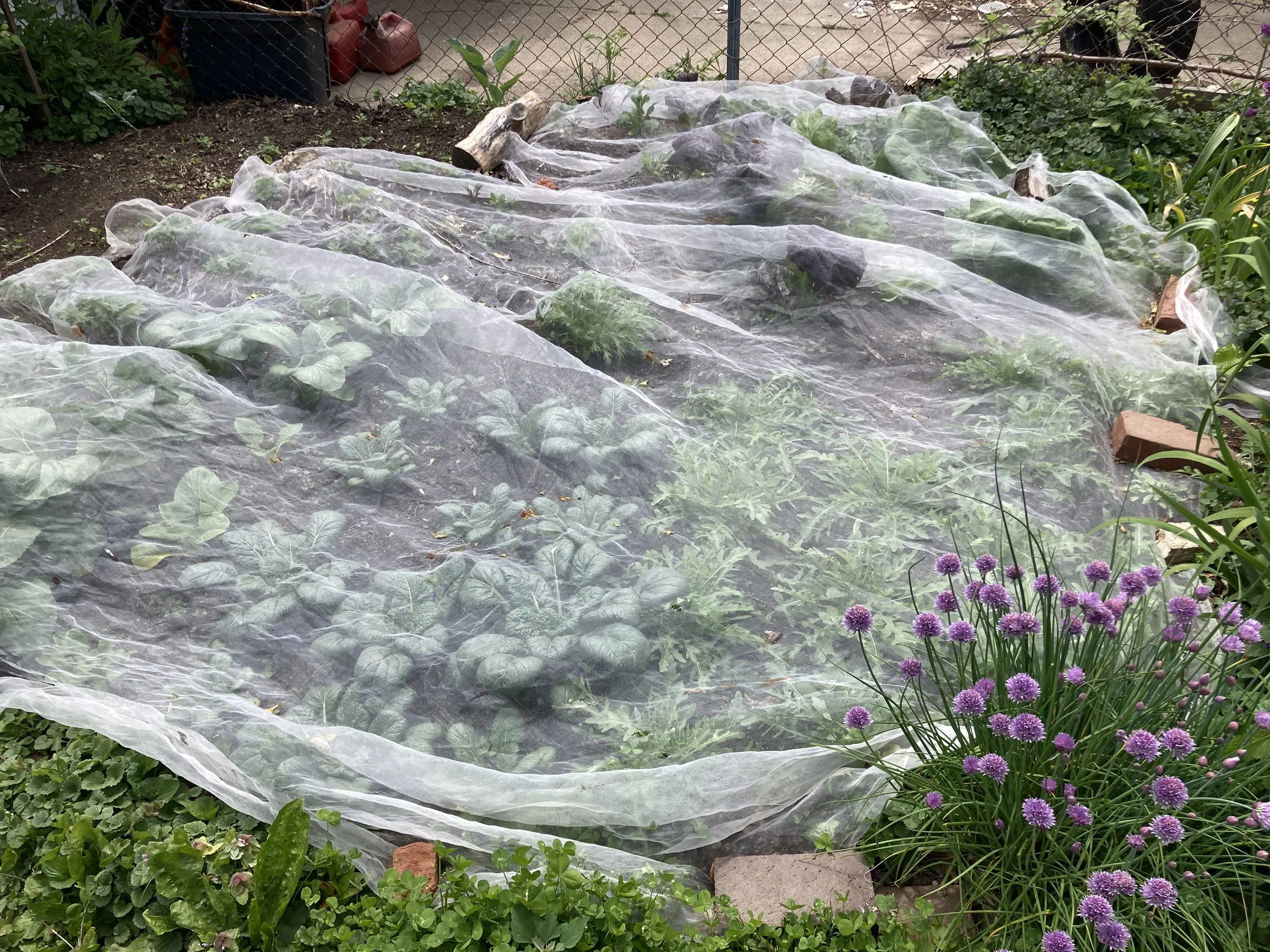
Brassicas under netting to keep the caterpillars and harlequin bugs away.
A Note on Harvesting After a Freeze
Trudging out into the snow to harvest fresh vegetables is peak gardening. They are supremely crisp and sweet. For leafy vegetables that will withstand temperatures below freezing, I like to wait until after they’ve thawed outside to harvest leaves. Otherwise the leaves themselves may get soft or mushy in my kitchen after they’ve been picked.
Resources for Learning More
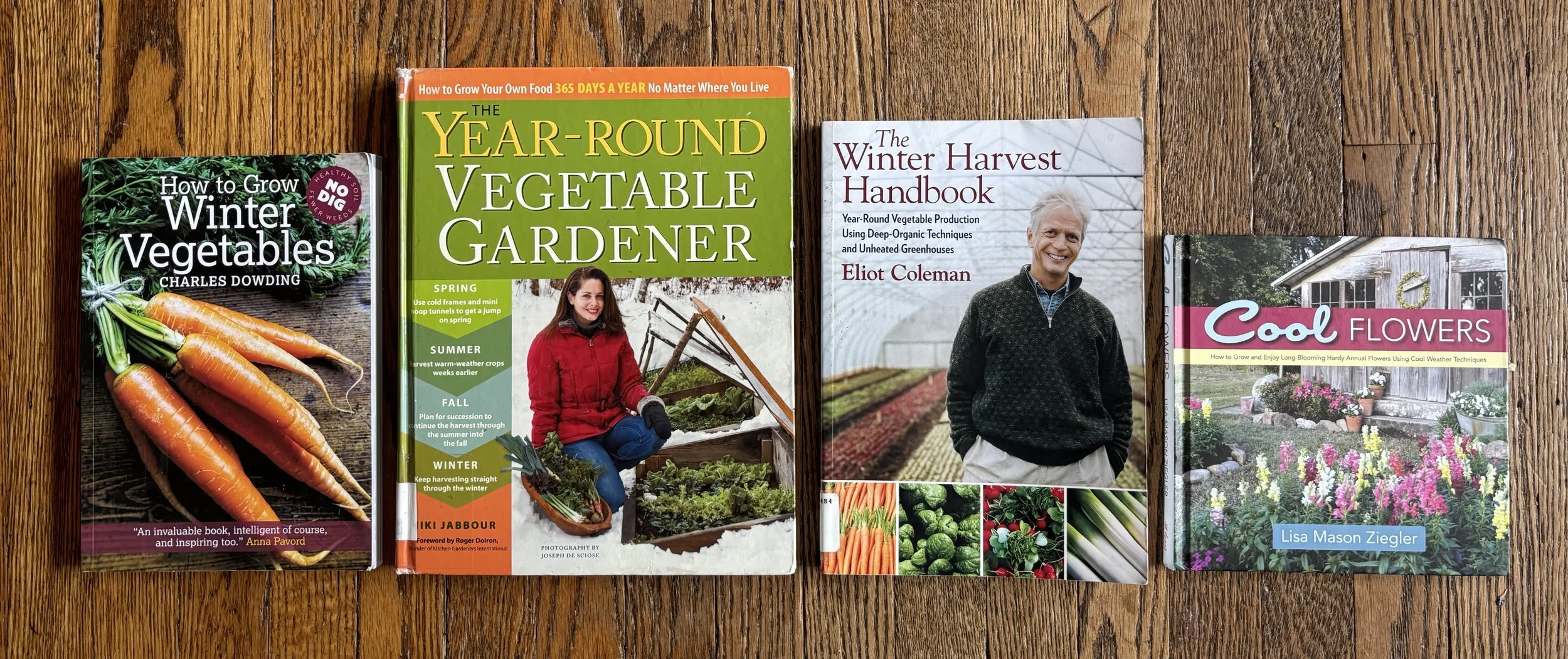
Charles Dowding’s book, How To Grow Winter Vegetables, is a wonderful resource that spells out in incredible detail how to get things right for just about any vegetable you want to grow. Highly recommend.
Nikki Jabbour’s book, The Year-Round Vegetable Gardener, is also good. It lists the varieties of vegetables and herbs she has had success with growing in the long Alaskan winters, and it also gives instructions for using frost blankets and building cold frames.
Eliot Coleman’s The Winter Harvest Handbook is a great reference and gives more detail on how to make growing vegetables in the fall and winter profitable. Coleman was an industry pioneer in using hoop houses and tunnels for year-round gardening in the US and brought the practice to the attention of many farmers and gardeners.
Lisa Mason Ziegler’s Cool Flowers, is my recommendation if you are interested in growing early spring and summer flowers. It’s a great general beginner gardening book as well as it really clarifies the steps to building new garden beds and starting plants from seed.